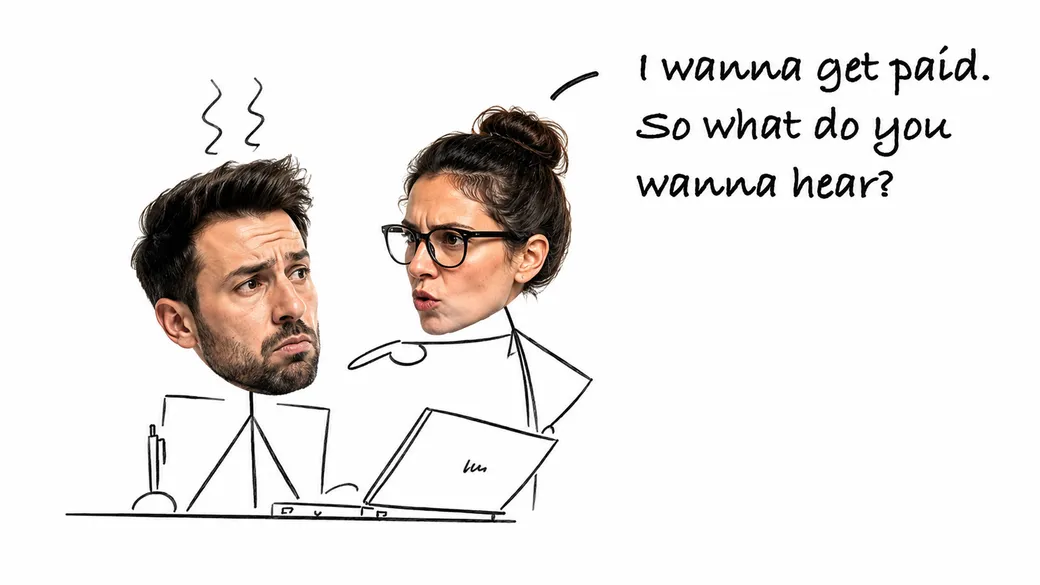
Surveys can only take you so far. While they’re great for gathering a general sense of user sentiment, they often miss the deeper insights that can truly transform your product. To uncover game-changing insights, it’s time to go beyond traditional methods.
Today’s edition will guide you in creating a comprehensive user research plan that goes deeper than checkboxes and multiple-choice questions. You’ll design an approach that’ll brings you closer to understanding the “why” behind user behaviors, helping you build products that resonate.
So grab your pen 🖊️ and get ready to map out a research plan that will take your product to the next level!
Let’s Get Started!
Step 1: Define Your Research Goals (10 min) 🎯
Start by clarifying what you want to achieve with your research. Knowing your goals will guide the methods you choose and help keep the project focused.
-
List Key Objectives: What are you trying to learn? Are you looking to identify usability issues, understand user motivations, or evaluate a new feature?
-
Set Success Criteria: How will you know if the research is successful? Define specific metrics or outcomes you want to see.
Step 2: Choose Your Research Methods (20 min) 🧠
Select a combination of qualitative and quantitative methods that will best answer your research questions.
-
Contextual Inquiry: Observe users in their natural environment to see how they interact with your product.
-
User Interviews: Conduct open-ended interviews to explore user motivations, frustrations, and needs.
-
Usability Testing: Have users complete specific tasks while you observe, noting any struggles.
-
Diary Studies: Ask users to document their experiences over a week to uncover patterns in behavior.
-
Analytics Review: Look at product analytics to spot trends or behaviors that need further investigation.
Step 3: Recruit Participants (10 min) 🙋♂️🙋♀️
Your findings are only as good as your participants. Ensure you recruit a mix of users who represent your target audience.
-
Identify Key Segments: Think about who uses your product—power users, first-timers, or users from specific industries.
-
Set Recruitment Criteria: Choose criteria that will help you get a representative sample, such as age, profession, or frequency of product use.
-
Reach Out via Multiple Channels: Use email, in-app messages, or social media to recruit participants.
Step 4: Create a Research Timeline (10 min) 📅
Plan out the logistics for conducting your research, from preparation to analysis.
-
Outline Key Milestones: Include participant recruitment, data collection, and analysis.
-
Set Deadlines for Each Phase: Make sure you have enough time to gather meaningful insights without rushing the process.
-
Account for Buffer Time: Build in a little extra time for unexpected delays.
Step 5: Design a Plan for Analysis (10 min) 📊
Define how you’ll analyze the findings once the data is collected. A solid analysis plan will help you draw actionable insights instead of getting overwhelmed by the data.
-
Organize Data Sources: Group data by research method (e.g., interview transcripts, usability test recordings).
-
Develop Themes: Look for patterns or recurring themes across different data sources.
-
Map Findings to Research Goals: See how the insights align with your original goals to ensure the research stays on track.
Need some help drafting your research plan? Not to worry, I got you. Here’s a template that you can customize to suit different projects and scale up or down based on the scope of your research.
User Research Plan Template
Project Name: [Name of your project or research initiative]
Date: [Start date of the research]
1. Research Goals
Define what you want to learn and how it will impact your product decisions.
-
Objective 1: [E.g., Identify key usability issues in the onboarding process]
-
Objective 2: [E.g., Understand user motivations for using Feature X]
-
Objective 3: [E.g., Explore reasons behind high churn rates]
2. Research Questions
List specific questions your research aims to answer.
-
Question 1: [E.g., What common tasks do users struggle with?]
-
Question 2: [E.g., Why do users choose to perform certain actions over others?]
-
Question 3: [E.g., What features do users find most valuable or frustrating?]
3. Methods and Techniques
Choose the research methods that will best help you answer your questions.
-
Method 1: [E.g., Usability testing – observe users performing specific tasks]
-
Method 2: [E.g., User interviews – conduct open-ended interviews to explore user needs]
-
Method 3: [E.g., Diary study – ask participants to document daily interactions with the product over a week]
4. Participant Recruitment
Outline the criteria for selecting participants and how you will recruit them.
-
Target Audience: [E.g., New users, frequent users, users who recently churned]
-
Recruitment Criteria: [E.g., Age range, profession, location, frequency of product use]
-
Recruitment Channels: [E.g., In-app invitations, email campaigns, social media]
-
Incentives: [E.g., Gift cards, discounts, product access]
5. Timeline and Milestones
Plan out the research activities and key deadlines.
-
Planning and Recruitment: [Start date – End date]
-
Data Collection: [Start date – End date]
-
Data Analysis: [Start date – End date]
-
Report and Presentation: [Start date – End date]
6. Data Collection Plan
Detail how you will collect data and manage research artifacts.
-
Tools Needed: [E.g., Zoom for interviews, Notion for note-taking, analytics tools]
-
Data Storage: [E.g., Store transcripts and recordings in a shared folder]
-
Confidentiality Measures: [E.g., Anonymize participant data, secure access to recordings]
7. Data Analysis Plan
Describe how you will analyze the collected data to derive actionable insights.
-
Analysis Methods: [E.g., Thematic analysis, affinity mapping, quantitative analysis]
-
Key Metrics: [E.g., Task success rate, time on task, frequency of issues]
-
Themes to Look For: [E.g., Common pain points, feature requests, user sentiment]
8. Reporting and Action Plan
Outline how you will share the findings and apply them to the product.
-
Format of the Report: [E.g., Slide deck, written report, infographic]
-
Presentation Audience: [E.g., Product team, executive stakeholders, developers]
-
Next Steps: [E.g., Prioritize key findings for product roadmap, implement quick wins based on insights]
9. Budget (Optional)
Provide a breakdown of the expected costs associated with the research.
-
Participant Incentives: [$X]
-
Tools and Software: [$Y]
-
Miscellaneous Expenses: [$Z]
10. Risks and Mitigation Strategies (Optional)
Identify any risks to the research project and how you will address them.
-
Risk 1: [E.g., Low participant engagement]
-
Mitigation: [E.g., Increase incentive amount, diversify recruitment channels]
-
Risk 2: [E.g., Delays in data collection]
-
Mitigation: [E.g., Build buffer time into the timeline, recruit extra participants as backups]
Approval and Sign-off
Research Lead: [Name] Project Manager: [Name] Date Approved: [Date]